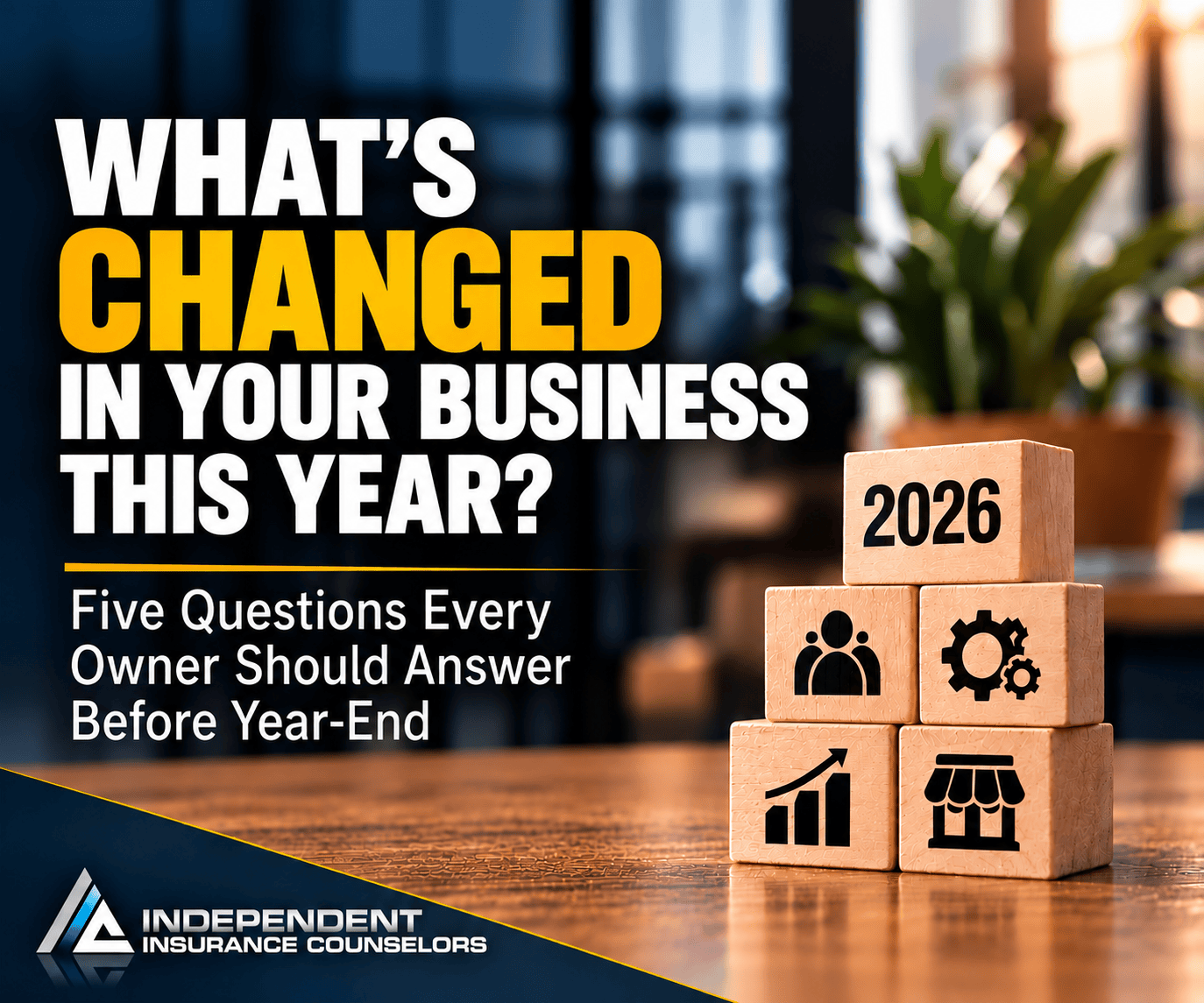
Growth is good—but every new employee, vehicle, service, contract or location can quietly change your company’s risk. Here are seven changes worth reviewing before they become expensive surprises.
Growth rarely announces itself with a ribbon cutting.
Sometimes it looks like hiring two more people because the phones will not stop ringing. Sometimes it is adding a service because customers keep asking for it. Maybe you bought another truck, leased extra space, signed a larger contract or started shipping products farther from home.
Individually, each decision can feel routine. Together, they can create a business that looks very different from the one your insurance program was originally built to protect.
That is one of the most common blind spots for growing businesses: the company evolves faster than its insurance information does.
The goal is not to call your agent every time you buy a new office chair. It is to recognize the changes that can materially affect what you own, what you do, who works for you and where your liability comes from.
Here are seven changes worth putting on your radar.
1. Your Payroll Changed
Payroll can move quickly when a company is growing. You may add employees, increase hours, create new positions or begin using people in different roles.
That matters because payroll and employee classifications can be important factors in workers’ compensation and other commercial insurance programs. The person who was originally hired for office work may now spend part of the week at job sites. A technician may begin supervising other employees. Seasonal help may become permanent.
The important question is not simply, “Did payroll increase?”
Ask, “Are our people doing the same work they were doing when our insurance information was last reviewed?”
2. You Added a Product or Service
A business can expand its offerings without thinking of the change as a new exposure.
A contractor starts doing a different type of installation. A retailer adds delivery. A medical or professional office adds a new service. A company that once sold products locally begins selling online.
From a business perspective, that is growth. From an insurance perspective, it can change the activities the company is asking its policy to respond to.
Before a new revenue stream becomes a large part of the business, make sure the operation described to the insurance carrier still matches reality.
3. Your Vehicles Are Being Used Differently
Commercial vehicles have a habit of becoming more useful over time.
A truck that once stayed close to the office may now travel across Texas. Employees may take vehicles home. Someone may occasionally use a personal vehicle for company errands. A growing sales territory may put significantly more miles on the road.
Those are operational decisions, but they also change driving exposure.
Review who is driving, where vehicles travel, how they are used and whether personal vehicles are being used for company business.
4. You Signed Bigger Contracts
Landing a major customer feels like a win—and it should.
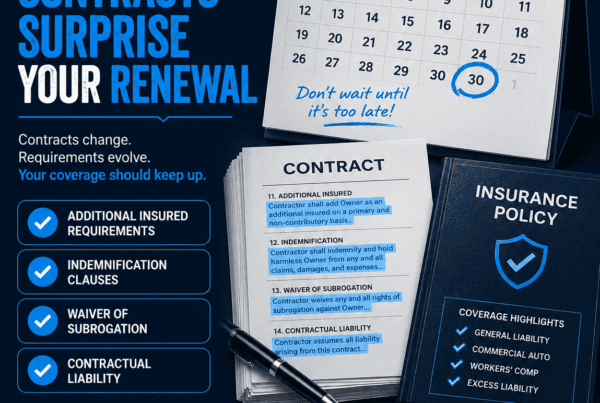
But larger customers frequently come with larger contracts, and those contracts can include insurance requirements, additional insured provisions, indemnification language, waivers of subrogation and specific coverage limits.
The dangerous time to discover a requirement is after the contract has been signed or after a claim.
When an agreement represents a meaningful new relationship, make insurance review part of the contract process rather than an afterthought.
5. Your Property Is Worth More
Think about what has been added during the year.
Computers. Tools. Machinery. Furniture. Inventory. Tenant improvements. Specialized equipment. Signage.
One purchase may not seem significant, but a year of purchases can be.
Property limits based on yesterday’s operation may not reflect what it would cost to repair or replace what the business owns today. Inflation and construction costs can add another layer.
A simple asset review can reveal how much the business has quietly accumulated.
6. Your Customer Base or Territory Expanded
Where you do business matters.
Perhaps your company began serving customers outside the Houston area, expanded throughout Texas or started shipping to other states. Maybe employees now work at customer locations more frequently.
Expansion can introduce different contractual obligations, travel patterns and liability exposures.
Ask a simple question: “Where are we doing business today that we were not doing business a year ago?”
7. Your Revenue Grew
Higher sales are usually celebrated. They can also be a signal that the scale of the operation has changed.
More revenue may mean more customers, more inventory, more transactions, more employees, larger projects and greater potential financial impact when something goes wrong.
Revenue alone does not tell the entire risk story, but a significant change should prompt a conversation.
The Best Time to Review Growth Is While Things Are Going Well
Insurance reviews often happen at renewal because renewal creates a deadline.
But your business does not operate on an insurance company’s calendar.
If you made a significant change in April, waiting until December to discuss it may leave months where your insurance information does not accurately reflect the operation.
That is why we prefer a simpler approach: when the business changes meaningfully, ask whether the insurance should change with it.
You do not need to know the answer. That is our job to help you evaluate.
At Independent Insurance Counselors, we have served Texas businesses since 1964. As an independent agency, we can help you look at your operation, identify changes worth discussing and evaluate options from multiple insurance carriers.
Growth should create opportunity—not uncertainty about whether the business you built is the business your insurance was designed to protect.
Has your business changed this year? Let’s review what is different before renewal forces the conversation.
Get Options. Get Clarity. Get Covered.