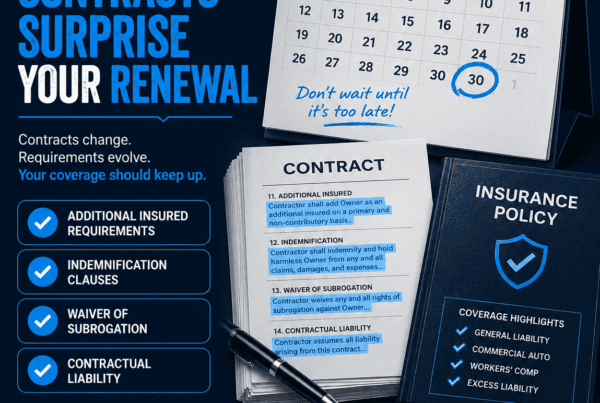
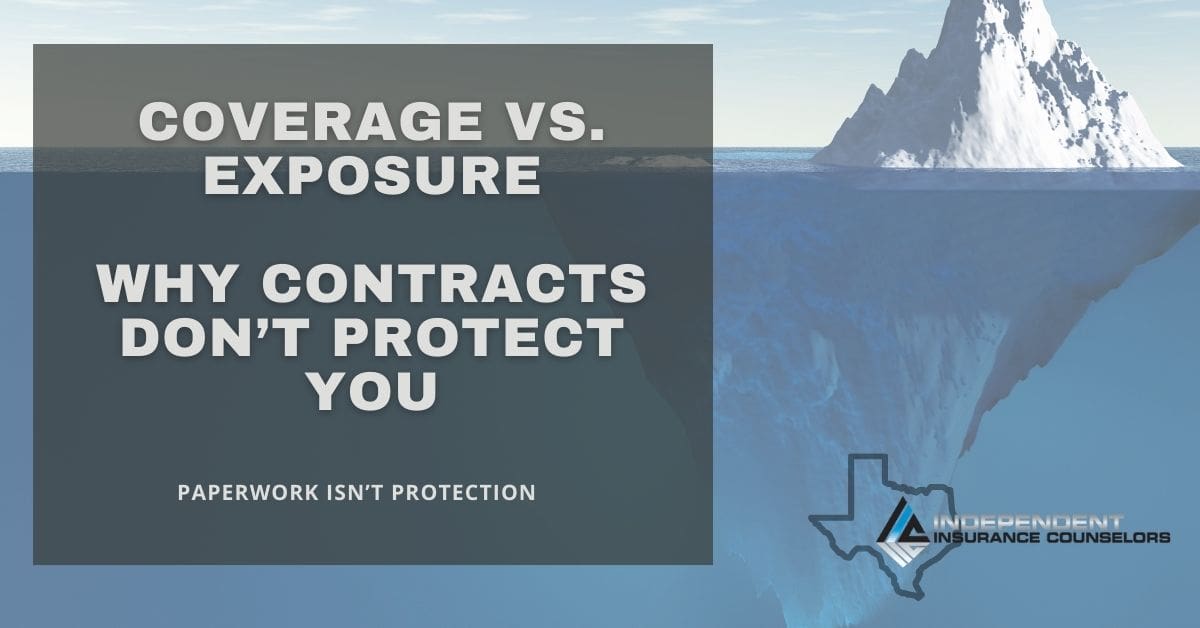
Many business owners assume that if they meet the insurance requirements outlined in a contract, they’re fully protected. Unfortunately, that assumption can lead to costly surprises. Contracts are designed to manage legal relationships—not to reflect the true risk profile of your business.
The Contract Trap
Most contracts impose standardized insurance requirements that apply broadly across vendors or subcontractors. While this may simplify contract administration, it often fails to reflect:
-
Your actual day-to-day operations
-
Your specific role on a project
-
The unique risks associated with your services
In other words, contracts focus on minimum requirements, not meaningful protection. Meeting those requirements may satisfy the agreement, but it doesn’t necessarily protect your balance sheet.
A Real-World Example
Consider two companies working at the same facility: a vessel cleaning contractor and a lawn maintenance company. On paper, they may be required to carry identical insurance limits. In reality, their exposures are vastly different.
The vessel cleaning contractor may face confined space hazards, chemical exposure, and higher injury severity. The lawn maintenance company may face equipment and slip-and-fall risks, but with a very different loss profile. Treating both businesses the same from an insurance standpoint ignores the reality of their operations.
Why “Having Everything” Isn’t Enough
Even businesses with multiple policies can still have major gaps. Many owners believe that having general liability, auto, workers’ compensation, and property insurance means they’re covered from all angles.
But policies contain exclusions. For example, consultants often discover that professional liability—arguably their largest exposure—is excluded from general liability policies. Other common gaps include cyber liability, employment practices liability, and contractual risk assumptions.
Simply having a long list of policies doesn’t guarantee protection if the coverage doesn’t match the exposure.
The Right Approach
Insurance should be built around how your business actually operates—not around the minimum limits required by a contract. The most effective programs start with understanding exposure first, then structuring coverage to address it.
We’re happy to help you evaluate your true exposure and make sure your coverage aligns with the real risks your business faces.

(281) 331-3131