For many businesses, insurance renewal season feels rushed, reactive, and unnecessarily stressful. Information is requested quickly, decisions must be made under tight timelines, and options can feel limited. What often gets overlooked is that most of this pressure is avoidable.
The key difference between a smooth renewal and a stressful one usually comes down to what was—or wasn’t—addressed earlier in the year.
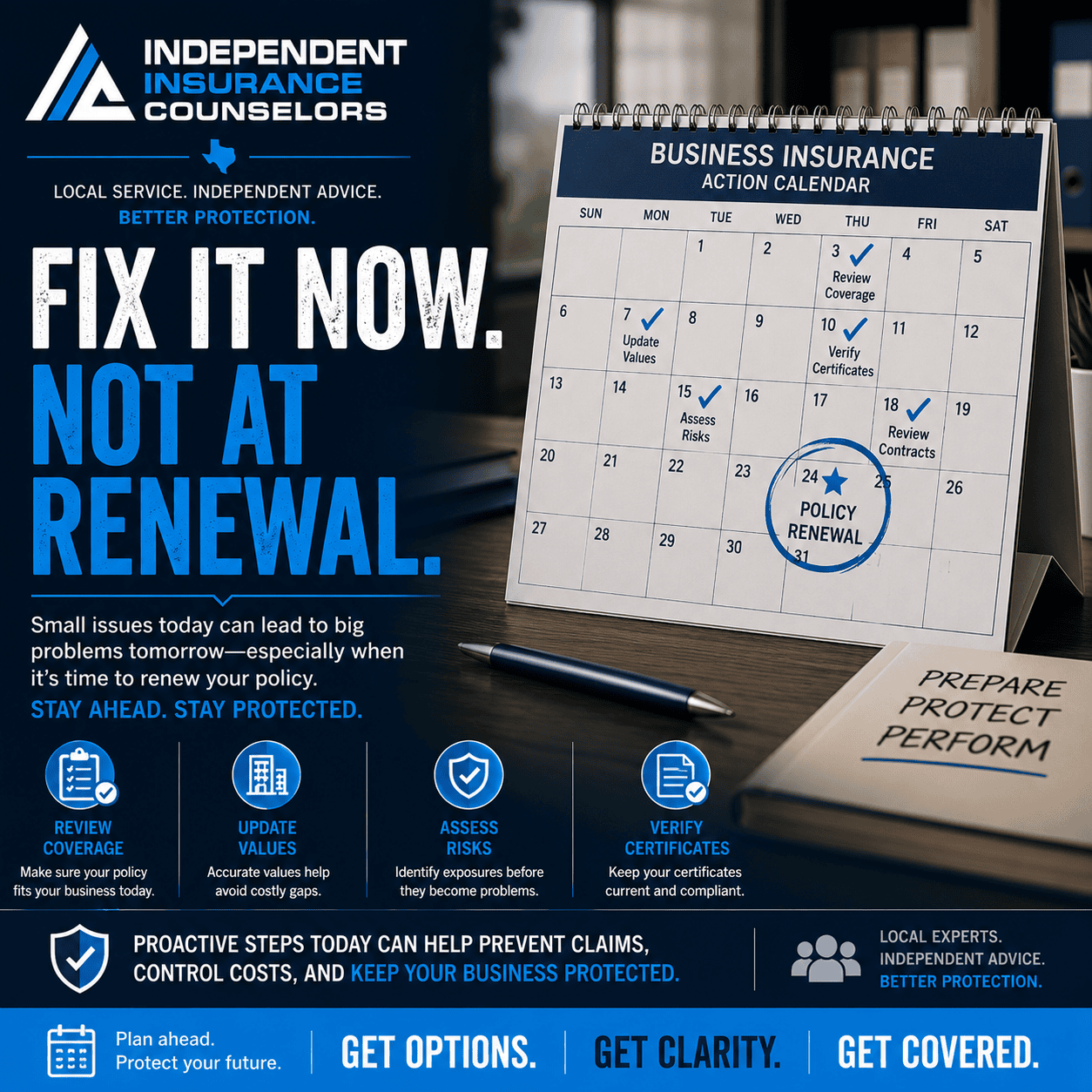
Mid-year planning creates space. It allows businesses to step back, review coverage thoughtfully, and make adjustments on their own timeline rather than reacting to deadlines. Instead of scrambling to fix issues at renewal, companies that plan ahead approach the process with clarity and control.
By the midpoint of the year, many businesses have already experienced meaningful changes:
-
Payroll and staffing levels may have shifted
-
Revenue may have increased, decreased, or diversified
-
Equipment, vehicles, or locations may have been added or reallocated
-
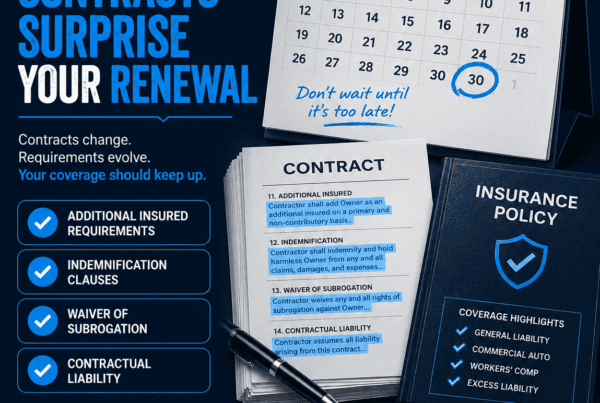
Contracts may have introduced new insurance requirements or liability obligations
Insurance policies, however, do not automatically adjust to reflect these changes. Without a mid-year review, coverage can quietly drift out of alignment with actual operations.
This is where problems begin.
Mid-year planning helps identify and correct key issues before they become obstacles at renewal, including:
-
Coverage gaps where exposure exceeds policy protection
-
Outdated property values that no longer reflect current replacement costs
-
Operational changes that impact liability, workers’ compensation, or auto exposure
-
Contractual risk introduced through new agreements or client requirements
Addressing these items early provides flexibility. It allows time to update policies, negotiate terms, and present accurate information to underwriters. When underwriters receive clear, well-prepared submissions, it often leads to more favorable outcomes and fewer surprises.
In contrast, waiting until renewal compresses timelines and reduces leverage. Underwriters have less time to evaluate changes, and businesses have fewer options if adjustments are needed. Decisions are made under pressure rather than strategy.
Mid-year planning also improves internal awareness. It encourages leadership to think about risk as part of operations—not just as an annual transaction. Businesses that take this approach tend to have more predictable insurance costs, fewer coverage disputes, and stronger long-term stability.
Insurance should not be something that is revisited once a year and set aside. It should evolve alongside the business.
Proactive planning creates leverage.
Reactive renewal creates pressure.
The difference between the two often determines whether renewal season feels like a routine update—or a challenge to manage.
If you’d like to get ahead of renewal season and address potential issues on your timeline, we’re happy to help. A mid-year review can provide clarity, improve outcomes, and reduce last-minute pressure.
Get Options. Get Clarity. Get Covered.
📞 Call: (281) 331-3131
📱 Text: (281) 978-4775
🌐 Visit: insurancetexas.net