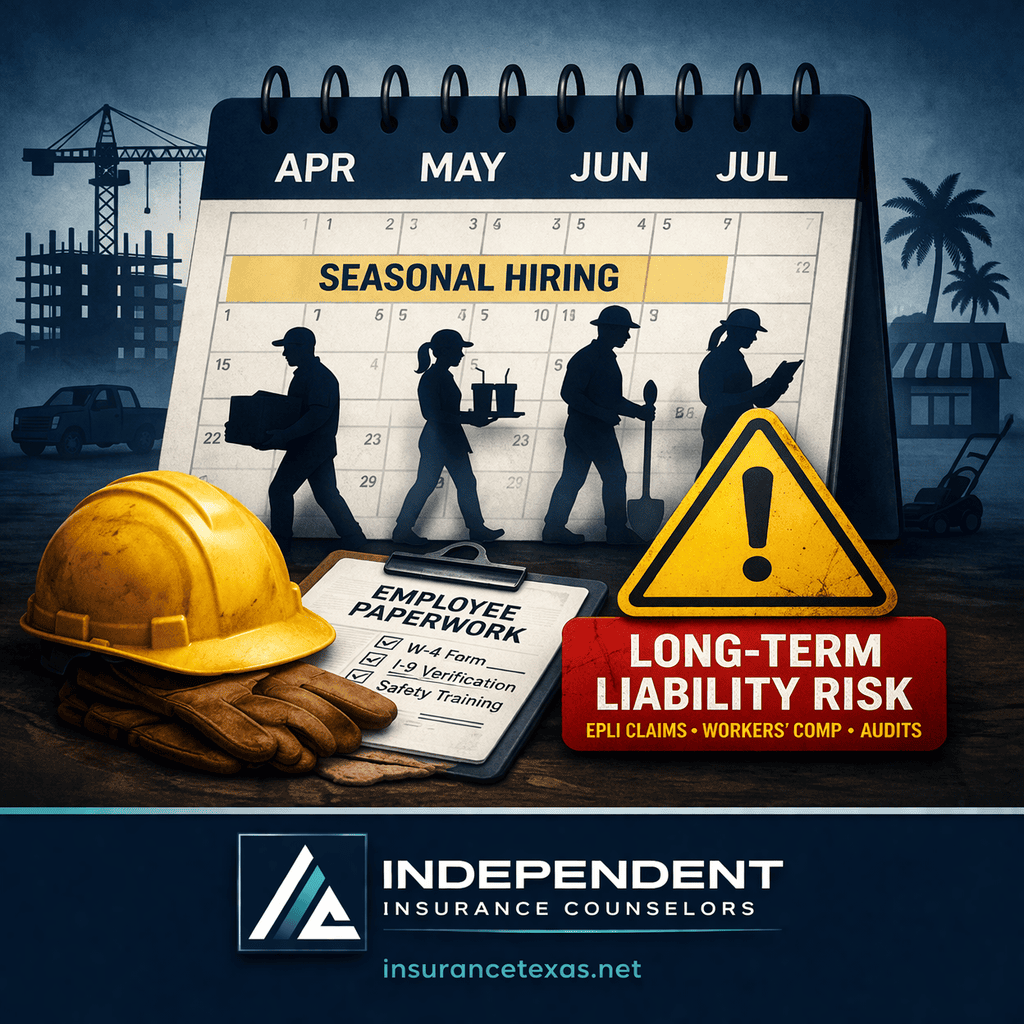
Seasonal hiring is often viewed as a short-term operational solution—extra hands during busy months, temporary staff for peak demand, or limited-duration roles that feel low-risk. In reality, seasonal employees can create long-term liability exposure that extends far beyond the season itself.
One of the most common misconceptions is that temporary employment equals temporary risk. From an insurance and legal standpoint, that simply isn’t true.
Seasonal employees can generate claims months—or even years—after their employment ends. Employment Practices Liability (EPLI) claims such as wrongful termination, discrimination, retaliation, or wage-and-hour disputes often arise after seasonal layoffs, when emotions run high and misunderstandings occur. These claims do not require long tenure or malicious intent to be costly.
Workers’ compensation exposure also increases during seasonal hiring. Temporary workers are often:
-
Less familiar with job-site hazards
-
Performing physically demanding work
-
Assigned duties that differ from their original job classification
Misclassified roles, inadequate training, or rushed onboarding can lead to injuries and workers’ compensation claims that follow the business long after the season ends. These claims can affect experience modification rates, future premiums, and overall insurability.
Another overlooked factor is documentation. Seasonal hiring often moves fast, and proper training records, safety acknowledgments, and job descriptions may be incomplete or inconsistent. When a claim occurs, missing documentation weakens a business’s defense and increases claim severity.
To manage seasonal hiring risk, businesses should review:
-
EPLI coverage limits and exclusions
-
Workers’ compensation classifications and payroll estimates
-
Training and onboarding procedures
-
Supervisor oversight and documentation practices
Seasonal employees may be temporary, but the liability they create is not. Treating seasonal hiring with the same risk awareness as permanent staffing helps protect the business from unexpected claims and long-term financial impact.
If your business relies on seasonal or temporary labor, we’re happy to help review how your insurance program responds to these exposures.
 (281) 331-3131